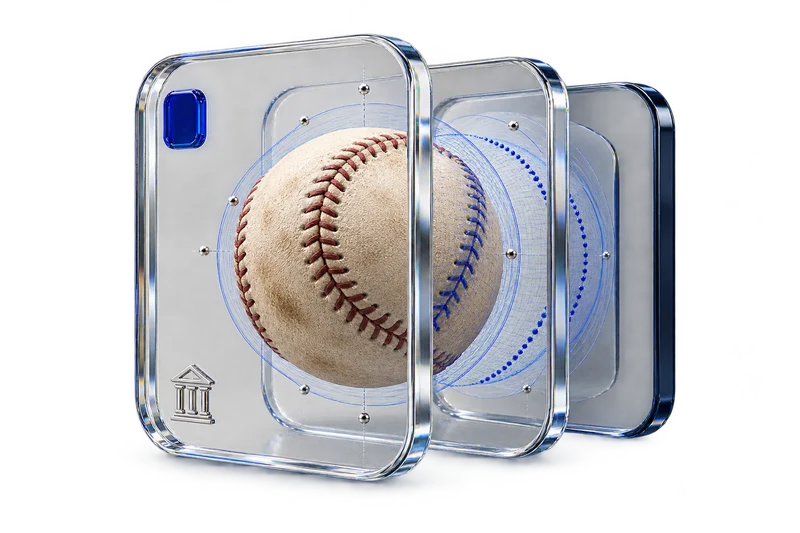
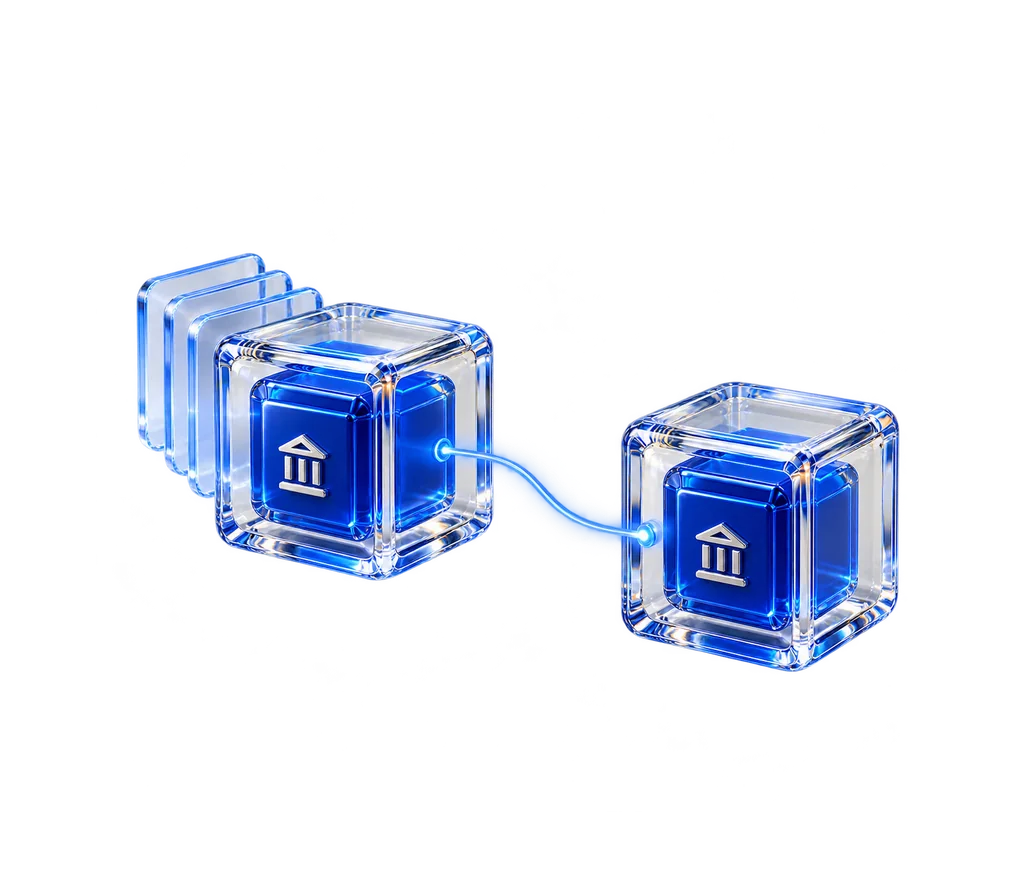
Illustrative object · Measured source and proof body.
01 / THE DEFINITION
Reality, recorded. Evidence, made portable.
“Digital matter is measured physical reality represented as structured data and sealed into a proof-native object as part of its verifiable state-body.”
From something real. To something you can inspect.
Watch the source, seal and history stay together. Choose a step to look closer.
Illustrative object
The same OriginalOrigin stays intact
THE OBJECT’S EVIDENCE
01 / Capture
Start with the real thing.
Record its measurements, photographs or inspection files. Keep the method, source and person responsible connected to what was captured.
The measured source
Seam scan
Mass measurement
Condition photographs
Illustrated sequence · No proof is issued by this demonstration.
02 / Seal
Give the evidence an Original.
Seal the captured source into a proof object. Its exact content, origin and verification material belong to that Original.
The sealed body
Exact source
Origin identity
Verification material
Illustrated sequence · No proof is issued by this demonstration.
03 / History
Let the life of the object stay with it.
Add the next inspection, custody event or ownership change through the existing proof-governed history. The origin remains intact.
The continuing history
Original capture
Added inspection
Accepted handover
Illustrated sequence · No proof is issued by this demonstration.
04 / Move
A new place. The same object.
Carry the complete Original and its required evidence to another device or conforming implementation. Its identity and history remain connected.
The portable Original
The same identity
The carried history
The required evidence
Illustrated sequence · No proof is issued by this demonstration.
05 / Inspect
Open the thing. Read its evidence.
Use the existing Receiz verifier and inspection tools to examine the Original, its bound source and supported history.
The inspection
Source integrity
Ownership history
Exact verification
Illustrated sequence · No proof is issued by this demonstration.
The evidence belongs to the object.
Wear becomes a record. A repair becomes history. A handover stays connected.
Open the Original and inspect the sequence. A later event adds its evidence while the first record remains part of the same life.
01
CAPTURE
Its first measured condition.
Photographs. Measurement files. Responsible identity. The source that begins the record.
02
INSPECTION
The next observation.
A new inspection adds its own source and method, connected to the earlier Original.
03
HANDOVER
The ownership event.
The supported transfer records who received the object and preserves the history that came before.
See the actual experience
The thing. Its terms. Its record.
See the actual Bankeiz inspection experience. This illustrative harvest keeps its quantity, source, ownership and terms visible before someone chooses the next action.
An appointment leads to a conversation. A conversation leads to an agreement and a recorded payment. The next meeting begins with that context available.
Your Twin can work with the history and permissions made available to it. The record keeps the actions and outcomes connected.
BJ Klock’s authored definition describes measured physical reality represented as structured data and sealed into a proof-native object. The physical measurements become part of the object’s inspectable evidence. Read the original essay for the full definition and argument.
What would I actually put into the object?+
The files that record the thing: photographs, dimensions, a condition report, a weighing record, an inspection document or another captured dataset. Include the source, method, responsible identity and relevant terms. The Original preserves the exact submitted material and its proof binding.
What does sealing establish?+
Sealing binds the exact recorded source to the Original and its verification path. Inspection can examine that source, the identity and claim involved, its signatures and the history the object carries. Each measurement retains the method and scope of the evidence that produced it.
How does the object gain history?+
Receiz preserves the origin and extends its history through accepted proof-bearing events. Open the supported history to inspect the sequence, the identities involved and the relevant ownership or custody state. Later events extend the record while preserving earlier evidence.
How does the physical object stay connected?+
Record the distinguishing evidence and the terms of the relationship. A later inspection can contribute another measured record. Ownership, custody and any physical delivery remain explicit so a reader can inspect precisely which thing, evidence and rights the Original represents.
What does ownership mean here?+
The Original exposes its own ownership state and the rights being offered. Open the terms and history before a transfer or purchase. The asset description distinguishes possession, custody and the ownership or use rights represented by that particular object.
What happens if someone repeats the file?+
Repeated bytes do not create a second ownership state, another accepted transfer or new funds. The supported action must satisfy the Original’s existing ownership, history and authorization rules. The artifact and its accepted continuity govern the result.
Can I take it to another application?+
Yes. Carry the complete Original and the evidence its verifier requires. Another implementation uses the same proof and continuity rules to inspect and handle it. The conformance standard makes those requirements explicit.
How does this connect to Bankeiz?+
Bankeiz supplies the familiar actions around the Original: create an asset, inspect its source and terms, view its history, share it and use the supported ownership or payment routes. Those surfaces compose the existing Receiz primitives.
How does this connect to a Twin?+
The same architecture supports a continuing record of interactions, permissions and recorded outcomes. Your Twin can reason with the context made available to it and use its supported tools. Meetings and appointments provide a practical place to see that continuity at work.
Where can I inspect the mechanism?+
Start with the proof-object explanation, open the verification tools and read the conformance documentation. The exact artifact, its carried evidence and the existing verifier make the mechanism inspectable. The original Digital Matter essay supplies the authored definition and broader thesis.