Explain less. Show the source.
Give the next person an inspectable original with its wallet-control evidence and recorded holding. Keep the basis of the conversation visible.
Reality-grade banking · For people who already hold crypto
You already hold something valuable. Make it easier to understand, show and put to work—with its source connected to the next step.
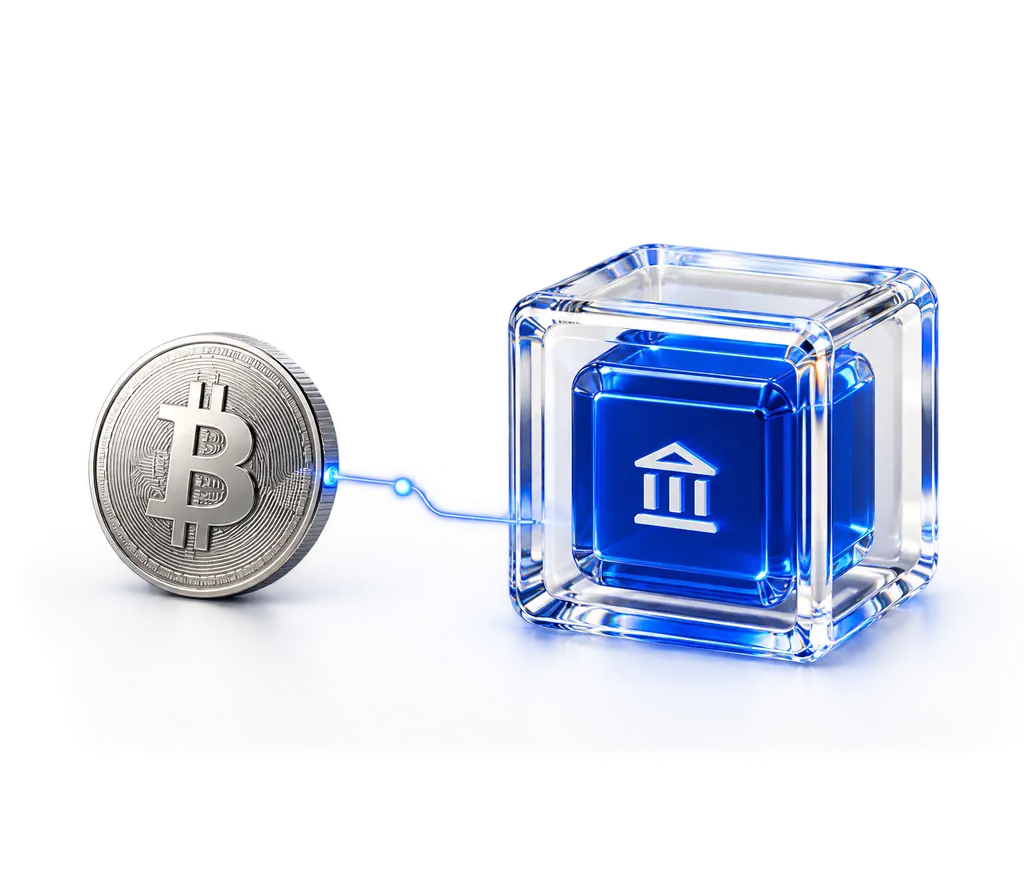
You know what you hold. Now make the next move clear.
You already own something.
A supplier to pay. A person to send value to. A purchase you want to make. Start with the actual holding, what the recipient accepts and a clear route between the two.
Give the next person an inspectable original with its wallet-control evidence and recorded holding. Keep the basis of the conversation visible.
Retain the original proof file and its recorded source coordinate. Open it again without depending on the same interface.
Know what moves, what the other person receives and what they can use next. Follow the supported operation and its actual receipt.
Something you can hold.
The existing tools connect an EVM wallet, ask for a wallet-control signature and seal a native-asset holding into a portable proof object. Your source snapshot travels with its network and recorded block information.
Illustrative source and proof objects · This animation accesses no wallet and performs no financial action.
Follow the actual relationship.
Keep what you hold, where it came from and what happens next in the same story.
Use your connected wallet to establish control and record the supported source state. Keep the network, asset and source coordinate with the proof.
Carry a sealed proof object you can inspect and verify offline. A dashboard or explorer is a way to view the story; the original is what you retain.
Identify a recipient, the accepted asset or payment and the route that can execute it. Carry the actual result forward when that operation completes.
The next experience. Your source, intact.
The useful question is what you want to accomplish: pay a supplier, agree an exchange or show a holding. Your original supplies the evidence it carries. The actual asset, acceptance and supported execution path determine the action.
Illustrative compatible applications · An actual payment, trade, access right or game use needs its own supported integration and authority.
Try what already exists.
Open an original in the existing explorer, use the current proof tools or work through your own situation in the conversation.
The current sealing tools open on Receiz, the reality-grade infrastructure. They create supported source proof; moving the underlying asset follows its separate execution route.
Built on a source that travels.
Reality-grade banking connects supported value, ownership and receiving through reality-grade infrastructure. Bankeiz is one reference experience. Compatible applications keep their own identity, interface and applicable authority.
Make it useful to you.
Talk to BJ’s real AI Twin here. Keep the question, the context you share and any confirmed appointment in one natural conversation.
BJ’s AI Twin · His Receiz continuity · Your conversation
The details that matter.
Understand what you can carry and what each actual operation does.
Explore the existing account, inspect public proof objects, speak with BJ’s Twin about a real use and open the current crypto proof tools. Those tools support connected EVM wallet control and sealing a native-asset balance source snapshot.
No. The source snapshot and wallet-control signature record their defined evidence. Sealing is separate from custody, a bridge, a deposit or transfer of the underlying crypto. The proof alone does not credit Bankeiz Reserve or Settlement.
Offline verification of a held proof does not submit a chain transaction. A transfer, deposit, withdrawal or reconciliation on the original network follows that network’s chain fees and the actual route. We do not describe those operations as universally free.
That depends on what they actually receive, available spendable value and another willing recipient. An inspectable proof is useful evidence; it does not by itself fund an onward payment or create liquidity.
Offline verification and offline financial execution are separate capabilities. A disconnected payment needs the applicable qualified custody, authorization, receiving and respend path. A portable source record cannot replace those requirements.
Reality-grade banking