Reality-Grade Banking
You Already Have What Someone Else Needs.
Your customer needs your harvest. You need fuel. Your fuel supplier needs repairs. The goods, work and relationships are already here. Why is the next exchange waiting for dollars?
Your money should carry its proof.
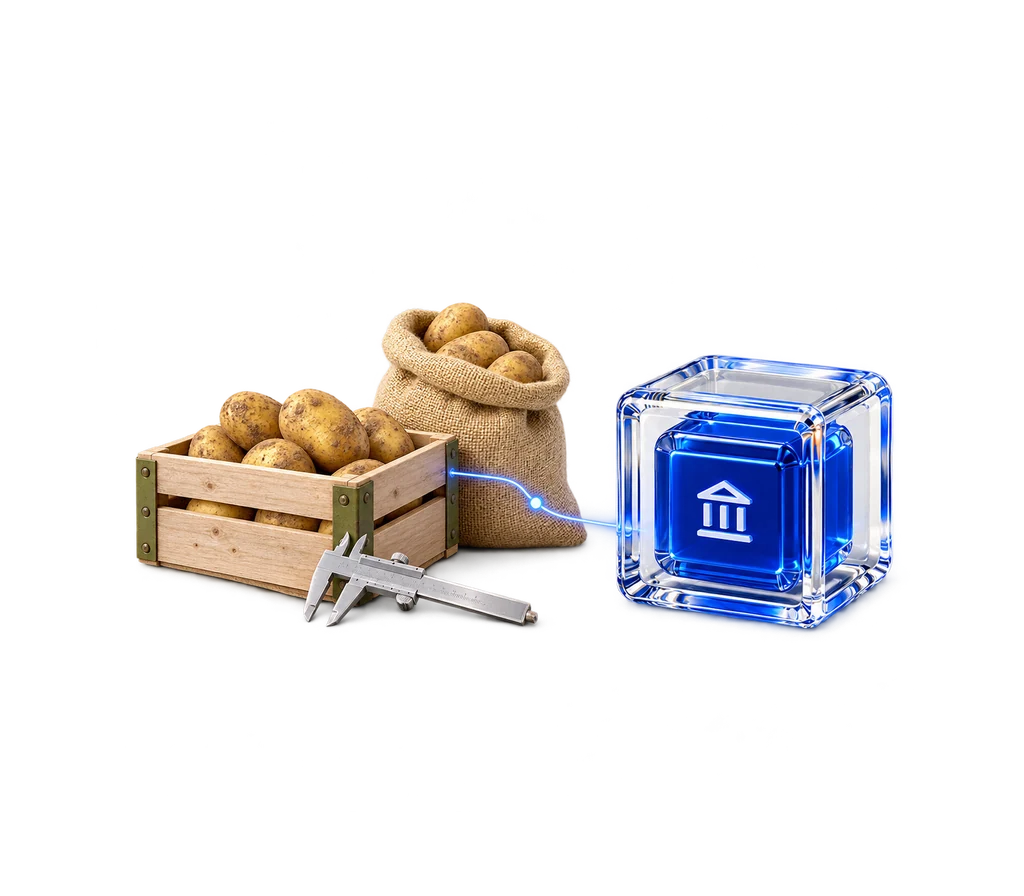
The value is already here.
The economy is already working. The next exchange is stuck.
Food is being grown. Buildings need repairs. People are doing useful work. Waiting for a sale, an invoice or a loan can hold up the next exchange even when both sides already have value to offer.
The next thing that keeps life moving.
Someone needs what you have. You need something they can help provide. Start with that relationship.
- 01
A farmer has produce and needs fuel.
- 02
The fuel supplier needs repairs.
- 03
The mechanic needs groceries.
- 04
The grocer needs the next delivery.
Illustrative relationship · The source, actual rights, recipient acceptance and supported execution path govern a real exchange.
Someone else needs what you have.
Four businesses.
Four real needs.
A way to keep value moving.
The farmer needs fuel. The supplier needs repairs. The mechanic needs groceries. The grocer needs food. They do not all need to want the same thing from the same person.
When each exchange waits for dollars
Four businesses. Four bank accounts.
Four separate cash-flow problems.
When each accepts a supported payment
Four businesses. Four real needs.
One compatible way to exchange accepted value.
The value stays connected.
Farmers · Buys fuel
A harvest someone needs.
- What they need next
- Fuel, inputs and repairs.
- Who receives their payment
- A fuel supplier
- What the recipient can use it for
- Repairs that keep deliveries running.
A commonly accepted monetary unit connects separate exchanges. Each party agrees its own price and approves its actual payment.
Fuel suppliers · Buys repairs
Fuel that keeps work moving.
- What they need next
- Repairs and reliable supply.
- Who receives their payment
- A mechanic
- What the recipient can use it for
- Food and supplies for the workshop.
A commonly accepted monetary unit connects separate exchanges. Each party agrees its own price and approves its actual payment.
Repair businesses · Buys groceries
The skill to put it right.
- What they need next
- Stock, food and everyday expenses.
- Who receives their payment
- A grocer
- What the recipient can use it for
- Produce to replenish the shelves.
A commonly accepted monetary unit connects separate exchanges. Each party agrees its own price and approves its actual payment.
Grocers · Buys food
Food people need today.
- What they need next
- Fresh stock and refrigeration.
- Who receives their payment
- A farmer
- What the recipient can use it for
- Fuel and services for the next harvest.
A commonly accepted monetary unit connects separate exchanges. Each party agrees its own price and approves its actual payment.
What if you didn’t have to wait for dollars
to make the next exchange?
Illustrative circulation · No funds move here. The circle needs sufficient spendable value, willing recipients, workable prices, completed commercial transactions and actual delivery. Obligations outside the network keep their agreed requirements.
Put familiar numbers to it.
One useful payment.
Four things that get done.
Start with a fuel purchase. Follow the same available value through repairs, groceries and food for the store. Change the quantity and watch the example update.
Public price reference: EIA · $6.276 per gallon · October 19, 2026. U.S. on-highway diesel average including taxes, not a local or off-road quote.
Starting payment value · USD reference$627.60
Gross payments illustrated · USD reference$0.00
- 01FuelFarmer → Fuel supplier$627.60Next
- 02RepairsFuel supplier → Mechanic$627.60Later
- 03GroceriesMechanic → Grocer$627.60Later
- 04Food for the storeGrocer → Farmer$627.60Later
Example ready · 0 of 4 payments illustrated
Farmer$627.60
Fuel supplier$0.00
Mechanic$0.00
Grocer$0.00
The value is available. Follow where it could go next.
The numbers and assumptions behind this example
The fuel amount is calculated from the dated EIA public series. The quantity is your example input. Repairs, groceries and produce are separate illustrative orders set to the same agreed dollar price so the circulation is easy to follow; they are not published merchant quotes.
Dollar amounts are reference prices for payments made using available, authorized Settlement under its actual Phi units and conversion rules. The example holds one conversion basis constant, assumes sufficient starting value, voluntary acceptance, no fees and completed delivery. It does not issue value, establish cash redemption, guarantee liquidity or change outside obligations.
Gross payments add four distinct exchanges; they are not new money, profit, income, savings or a credit multiplier. Actual trades use their own prices, authorizations, available value and confirmed receiving evidence.
The work already exists in real communities
Publicly described businesses around Ames and Nevada, Iowa, make the roles tangible. These are examples of existing services, not confirmed participants, endorsements or evidence of a trading relationship.
Sources checked October 26, 2026. The payment example does not assign these businesses a balance, invoice, payment, acceptance policy or financial result.
The economy is wider than one application.
One Economy.
Any Compatible Experience.
Switch the interface. Follow the same illustrative monetary units and their source relationships beneath it.
Bankeiz application
Farmers
Your next season.
Fuel, inputs and repairs.
Same illustrative units · A different interface
What could come nextRepairs that keep deliveries running.
Custom merchant checkout
Fuel suppliers
A clear way to receive.
Repairs and reliable supply.
Same illustrative units · A different interface
What could come nextFood and supplies for the workshop.
Independent mobile wallet
Repair businesses
The job is done.
Stock, food and everyday expenses.
Same illustrative units · A different interface
What could come nextProduce to replenish the shelves.
Cooperative point of sale
Grocers
Keep the shelves stocked.
Fresh stock and refrigeration.
Same illustrative units · A different interface
What could come nextFuel and services for the next harvest.
Member payment portal
Housing cooperatives
Keep the homes cared for.
Maintenance, materials and energy.
Same illustrative units · A different interface
What could come nextSupplies and compensation for the work.
Personal financial application
Workers
Make the next step useful.
Food, housing and transport.
Same illustrative units · A different interface
What could come nextStock, maintenance or another agreed payment.
Source relationshipCurrent authorizationAccepted transition & receiving evidence
Different applications. One compatible financial architecture.The frontend changes. The proof doesn’t.
Illustrative interfaces and financial operations. No funds move here. No actual source, authorization or receiving result is asserted. Each implementation must establish its own applicable trust, custody and execution requirements.
What this makes possible.
Make the next exchange
work for both of you.
Start with what is already yours.
Identify the goods, completed work, supported value or defined rights you can actually offer.
Make the next exchange useful to both sides.
Start with someone you already buy from or sell to. Understand what they need and what they could use next.
Keep the source through every handover.
Use the existing supported asset or monetary path. Keep the agreed terms, authority, receiving evidence and result connected.
What they receive needs a next use.
Something useful for the next person.
A commonly accepted monetary unit connects separate exchanges; you do not need a perfect reciprocal swap. Receiving is the beginning of their next decision. Agree an actual onward route with a willing recipient and preserve the original evidence through the supported operation.
From understanding to seeing.
Open the object.
Inspect the payment.
Plan the next use.
The infrastructure is available to inspect today. Follow real public originals and the supported readers, then bring one existing relationship into the conversation.
010203
Open an original
Inspect an actual public object, its source, supported rights and ownership history.
Follow payment evidence
Open an actual published record and its available original evidence. The covered source establishes what it proves.
Map the next use
What can the recipient do with the value? Choose a willing counterparty and a supported route.
The examples explain possible exchanges. These readers open the existing product; they do not claim the illustrated four businesses have completed a live trading circle.
Built on Receiz. Open to independent implementations.
Keep your name.
Choose your experience.
Use the reference application, build your own, or connect the receiving standard to software you already use.
- 01
Receiz
The proof-native foundation: identity, original proof, ownership, authority, continuity, verification and supported financial execution.
Reality-grade infrastructure - 02
Reality-Grade Banking
The open financial architecture and compatible receiving standard for proof-native value, ownership, payment and continuity.
Inspect the receiving requirements - 03
Your experience
Bankeiz is the official branded reference implementation. Your cooperative’s application, merchant checkout or institutional integration can keep its own branding and operating environment.
Build a compatible experience
You do not have to use Bankeiz to participate. Independent implementations retain their own permissions, custody authority, financial writer and conformance responsibilities.
Infrastructure that already exists.
Start with one relationship.
Make one next step clear.
You can inspect the source, explore the working reference application or work through your situation here today.
- 01
One real source and the actual rights it carries.
- 02
Two willing participants with something useful to exchange.
- 03
The applicable receiving path, permissions and acceptance evidence.
Open architecture. Inspectable requirements.
Anyone Can Build It.
Can They Prove It Works?
Implement the published requirements in your own language and environment. Assess the applicable scope without Bankeiz permission or purchasing a badge.
Public contract harness
Run your adapter against independently computed synthetic cases. The result covers those cases.
Reference engineering tests
Inspect the named checks, source versions and fixture assumptions for the reference implementation.
Production qualification
Establish the actual implementation, capability, rail, custody, funding, build and operating environment with applicable independent evidence.
A synthetic contract pass does not certify live custody, funding or financial execution. Conformance is evidence within the exact assessed scope.
What moves—and what each record establishes
- Glyph deterministic value
- The source and existing valuation rules determine the supported calculation. A calculation alone does not execute a payment.
- Lawfully admitted Settlement
- Available proof-native monetary value follows its admission, authority and financial execution requirements.
- Reserve
- Admitted proof-backed funds retain their funding source, denomination and supported execution path.
- Asset ownership
- The exact source, rights, current owner and authorized transition govern the supported handover. Physical title and delivery keep their own evidence.
- USD reference valuation
- A displayed reference is distinct from cash funding, a redemption obligation or sale proceeds.
- Agreed exchange price
- The parties agree the actual exchange terms. A valuation does not supply a buyer or universal acceptance.
- Confirmed receiving
- The applicable exact source and accepted terminal result establish receiving. A screenshot or success message cannot replace them.
- Offline proof verification
- A compatible reader can inspect the carried proof under its supported verification scope.
- Qualified offline financial execution
- Spending requires its actual protected custody, exclusive allocation, authorization and financial writer. Copying an image or verifying offline does not establish this capability.
Start with the next thing you need.
Your economy.
Your point of entry.
Different work. Connected needs. Choose the part of the economy you already belong to.
Your situation. A useful next step.
What could move
for you today?
Talk it through with BJ’s Twin. Keep your questions, the context you share and an optional confirmed appointment in one conversation.
Talk to BJ.
BJ’s AI Twin · His Receiz continuity · Your conversation
Clear answers. A concrete next step.
Start with what
matters to you.
Do we have to buy a new currency first?
Start with your actual sources, available supported value and the exchange you want to make. Asset rights, available Settlement and Reserve have their own rules. The conversation and public reference require no deposit or subscription.
Does everyone have to join the same application?
No. Compatible implementations can use different interfaces and branding. Each must preserve its applicable source, authority, receiving and execution requirements.
What can we do today?
Inspect the existing implementation, open a supported original, try the public conformance testbench, or map one exchange with a willing counterparty. Production execution uses its actual qualified route and permissions.
Reality-Grade Banking
You already produce the value.
Let it move.
You already have the value. You already have the people.
You already have the economy. Now you have another way to make it move.
Built on Receiz. Demonstrated by Bankeiz.
Open to independent implementations.